

Last week the stars aligned so that in London it was possible to start the day with a vigil at a slaughterhouse in East London, move on to a protest organised by The Humane League outside Unilever (eggs from caged chickens) and then a PETA UK protest at Queen Mary University of London (animal testing). More or less every day in the UK it is possible to protest, march, do outreach or, at the very least, sign a petition, write to your MP, or double a donation with match funding. But does it all add up to time well spent?
During my day in London, there was certainly time to reflect on this question. Did, for instance, an hour and a half in driving rain outside Unilever’s London HQ near Blackfriars make sense? Did it achieve anything? Should we have been calling for Unilever to stop using eggs per se (abolitionist) rather than today’s welfare demand?
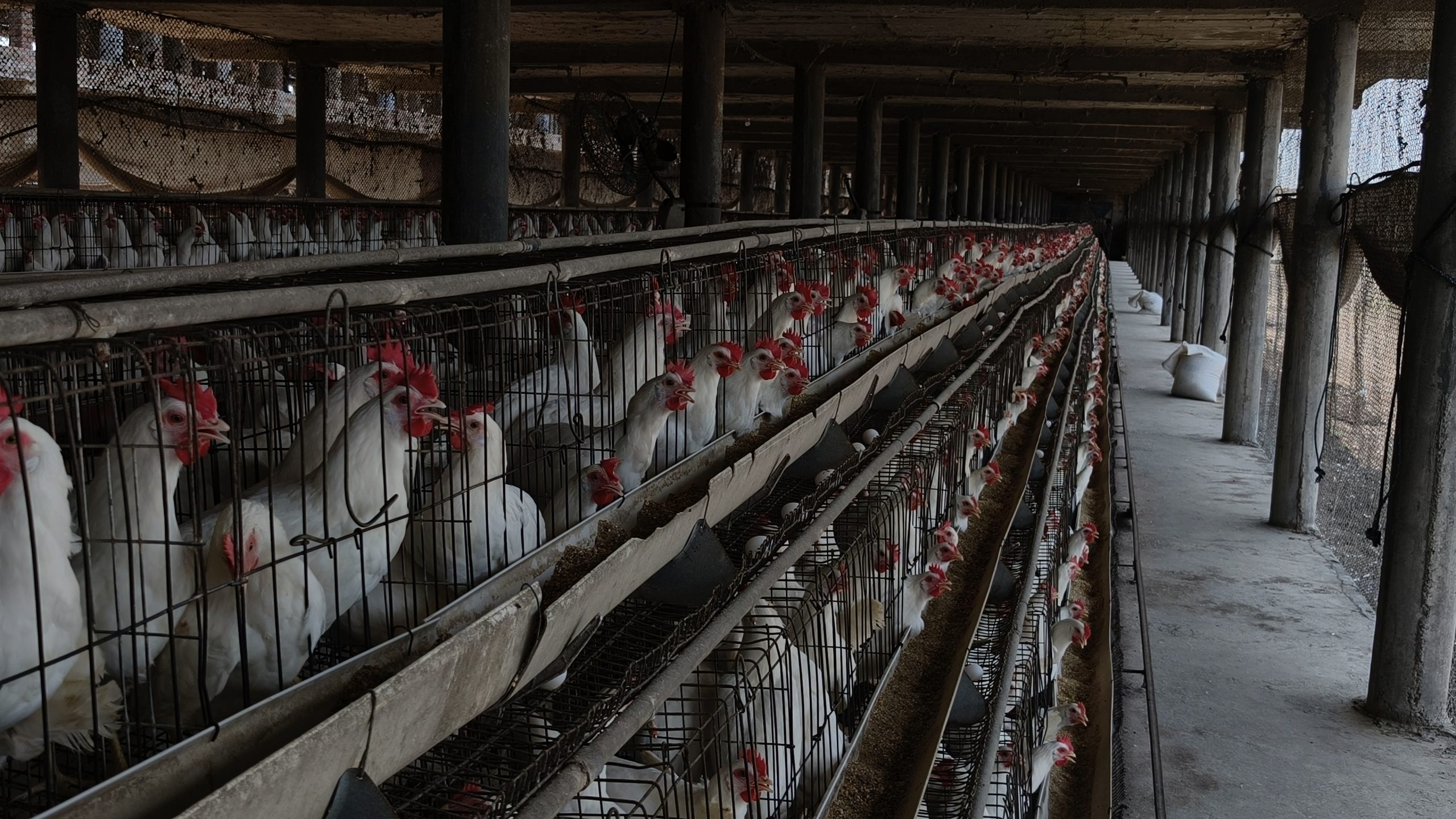
Let’s start in chronological order. The monthly vigils organised by East London Chicken Save seem a worthwhile thing to do. There may only be five or six of us at 6am to meet the daily lorry of 5000 chickens destined for this hellhole that is Kedassia slaughterhouse. However, it seems important to bear witness and to try to throw a light on their fate. Similar vigils happen across the country and anything that exposes the reality of the food systems seems vital, otherwise it is business as usual, out of sight, out of mind.
The vigils, I think, also impact the individuals who take part, as do investigations and liberations. It radicalises, it moves us out of our comfort zones and it makes us better advocates for change, being able to talk from a position of experience whether that’s via outreach or on a one-to-one basis with people.
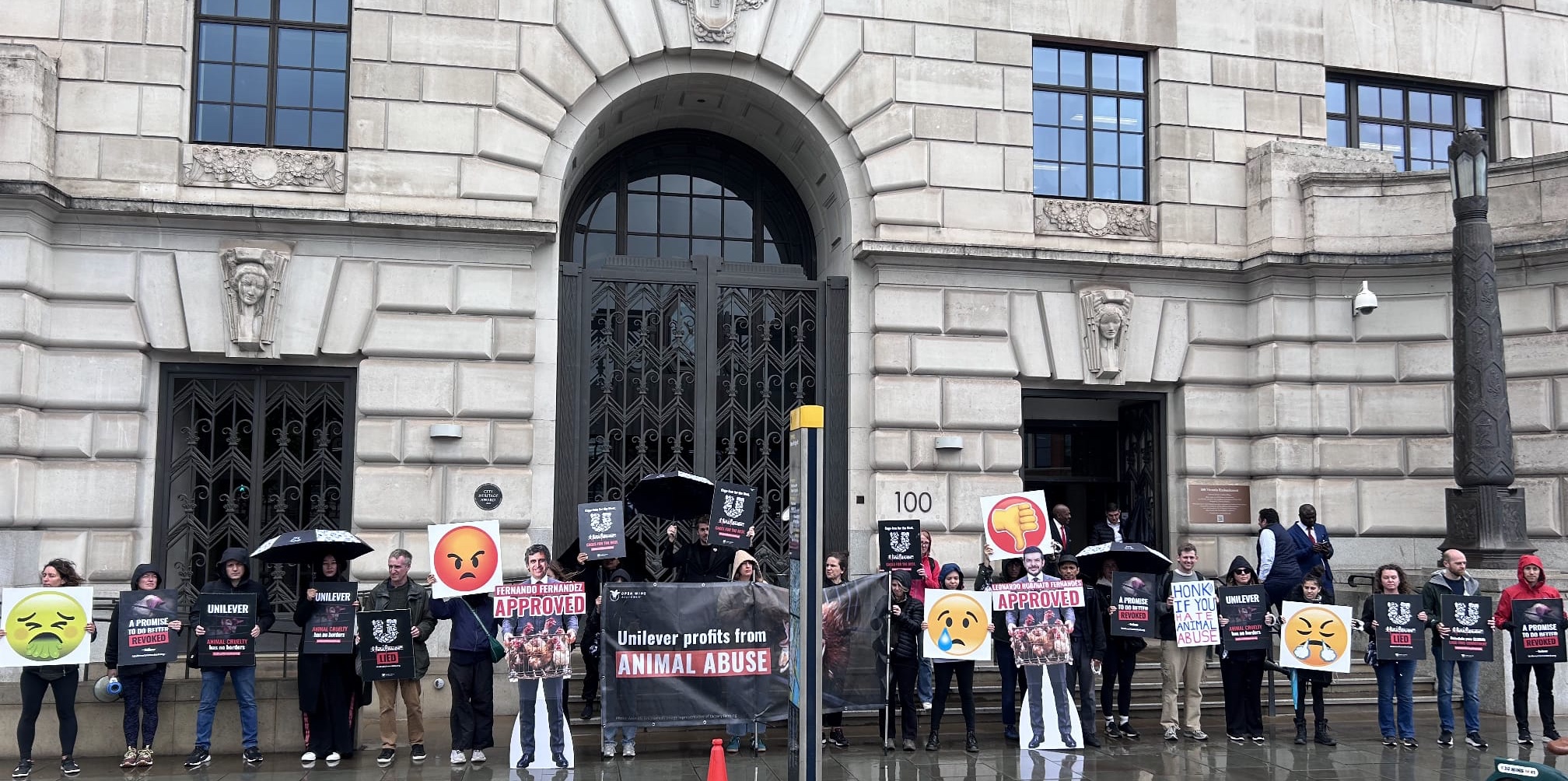
Let’s move on to the protests. Unilever promised to source 100% cage-free eggs globally by 2025, but then rowed back on this and has done so only in Europe and North America. The Humane League and Open Wing Alliance are applying pressure to expose this, in part using the huge conglomerate’s sponsorship of the current 2026 FIFA Men’s World Cup as a hook.
Alongside perhaps 20 staff from The Humane League, this was the third day of three protesting outside the HQ, with chants, general noise, cut-outs of two of Unilever’s executives, and leaflets for passers-by. A promise is a promise and, no doubt, the company received kudos and plaudits when it made the original pronouncement, so it seems right that it is now being held to account. Can Unilever be embarrassed into doing the right thing? Apparently staff were told to work from home on these days and, if they were in the office, not to engage.
On to Queen Mary University, near Mile End, in east London. It was a small group of us that went on to campus with banners, placards, chants and a location below a window of a room hosting a meeting of the University’s hierarchy. There was soon a gaggle of security personnel, a few intrigued onlookers, and a threat to call the police. To the surprise of a few of us, we had the call that we were leaving after only 15 minutes or so. Photos and video footage gained for social media, job done? I for one had only just mastered the chants but then I am a slow learner. “Sepsis experiments should be cruelty-free; End the tests, let mice be!”
In fact, our PETA UK lead emphasised he had a responsibility to the volunteers and it had never been touted as an arrestable action, so he felt we should leave. Which seems reasonable in these uncertain times when it comes to police powers and pharmaceutical. Any action like this is also, of course, part of a bigger and coordinated campaign. And we were then in the right place at the right time to push a broken down food van that was stuck on Mile End Road – having first checked that it had vegan options!
The University continues to test on animals, despite the inherent cruelty and unscientific nature of these practices. PETA UK has been running a campaign here for a while, which includes a large advertising billboard nearby and twice disrupting this meeting as well as postgraduate open days, but the university, to date, has failed to engage, which seems pretty stupid. So, again, probably worth the time and effort (and it had stopped raining by now!).
It is easy to be critical of what might seem like scattergun actions – why Unilever or why this University, as opposed to so many other potential targets? Is chanting and holding banners sufficient in the face of such massive, systemic cruelty? Why a welfarist ask (pragmatic, achievable, small steps?) not an abolitionist one? And to what extent do the big charities pick their targets based on funder preferences?
Ultimately, what would I have been doing if I hadn’t been here? Probably all of us in the movement, at times, feel we are flailing around a bit, uncertain of what works and what doesn’t. But nothing will work if we don’t try. And I think it is fair to conclude that Kedassia, Unilever and Queen Mary University would all rather we hadn’t turned up. Which at the end of the day is probably reason enough.



Leave A Comment